Broker or Direct — the Honest Comparison
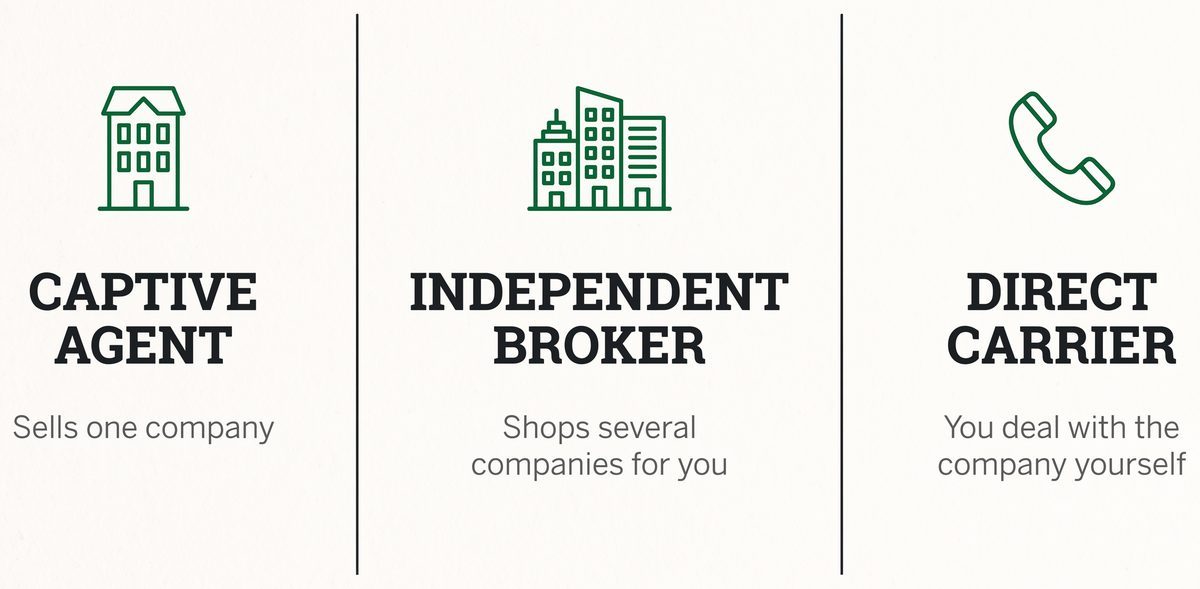
It's a fair question and deserves a straight answer, including the part where we have an obvious interest in it. Here's how both routes actually work, and when each one wins.
How a broker gets paid
The insurance company pays the broker a commission on policies it writes. You don't pay extra for the comparison, and the quotes aren't marked up for using one. That's the business model, stated plainly.
Auto World Insurance Services has a dedicated page on an independent broker vs buying direct for the statewide picture.
What buying direct gets you
Buying straight from one company means dealing with that company's own pricing and service, on its website or phone line. If you already know which carrier fits you and you're comfortable managing the details, it's a perfectly reasonable route — particularly for very standard profiles where quotes cluster closely anyway.
What a broker adds
Access across several carriers in one conversation, and knowledge of which of them wants your specific profile — which matters most for the drivers who need it most: violations, young drivers, unusual vehicles, SR-22 filings. Several carriers that compete hard for non-standard business don't advertise to consumers at all, so DIY shopping rarely finds them. And when something goes wrong later, you have someone whose job is to chase it.
The honest summary
Standard profile, comfortable shopping, happy with your carrier — direct is fine. Anything non-standard, or you'd rather not spend the afternoon on it — a broker is doing work you'd otherwise do worse. Either way, compare before you commit. Ours takes two minutes.
The question that settles it either way
Whichever route you take, ask one thing: which carriers were actually quoted, and which were not? A direct quote covers exactly one company. A broker covers the companies they hold appointments with — which is several, and is never all of them. Anyone who implies otherwise is overstating it.
Once you have that answer you know how much of the market you have seen, which is the only meaningful measure of whether a comparison was thorough.
What changes after you buy
The purchase is the short part. The years afterwards involve adding a vehicle, removing a driver, changing an address, replacing a card that expired, and eventually reporting a claim. Ask both routes the same question: who do I speak to when something changes mid-term, and who chases it if it goes wrong?
With a direct carrier, the answer is that carrier's service line. With a broker, it is a person whose job includes chasing it on your behalf. Neither is automatically better — it depends on whether you would rather handle it yourself or hand it over.
Using both, which is what we would actually suggest
The routes cover different slices. Some large carriers distribute only direct and will never appear in any broker's panel; many other carriers sell only through agents and will never appear on a direct website. A comparison that uses both is simply wider than one that uses either.
If you do that, hold the coverage identical across the two. This is exactly where mismatches creep in, because a direct quoting engine's defaults will not match what a broker built for you, and you will end up comparing two different policies without realizing it.
The disclosure we owe you
We are a licensed California brokerage, so this page is not neutral and we would rather say so than pretend. What we will commit to is naming the carriers we ran and telling you when a direct carrier we cannot access is worth your phone call. That is the standard to hold anyone to, including us.
Get this quoted for your situation
Free quotes from multiple carriers, prepared by a licensed California agent. Two minutes, no obligation.
Get My Free QuoteMore of what callers ask
Do brokers only show carriers that pay them most?
A broker earns on whatever they place, so the incentive is to place something you'll keep. The check you control: ask to see the options and the coverage behind each price — a straight answer to that question tells you a lot.
Can a broker get me a price I couldn't get myself?
Same carriers, same filed rates — a broker doesn't get secret pricing. What they get you is access to companies you'd likely never contact, and the right one identified quickly.
What if I want to leave the broker later?
Your policy is yours — you can change how it's serviced or move on entirely. Nothing about using a broker locks you in.