Making Sure You're Comparing the Same Thing
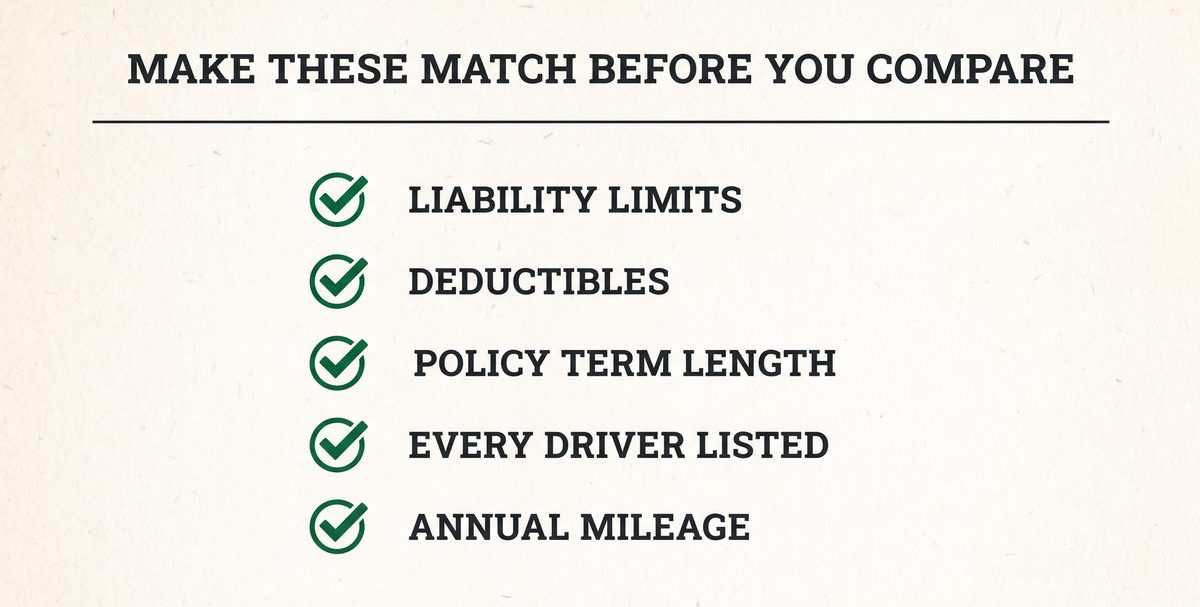
The most common mistake in insurance shopping isn't picking the wrong company — it's comparing two quotes that were never comparable. A cheaper number for less coverage isn't a saving; it's a smaller product at a smaller price. Here are the five lines to align before any comparison means anything.
1. Liability limits
California's minimum is $30,000 per injured person, $60,000 per accident, and $15,000 for property damage. If one quote is built at those minimums and another at higher limits, the cheaper one is buying you less protection, not better value. Line them up at the same limits first.
2. Whether comprehensive and collision are included
These are the coverages that protect your own car, and they're optional in California unless a lender requires them. A quote without them will always look cheaper. Decide whether you want them, then compare quotes that all reflect that decision.
3. Deductibles
The amount you pay before coverage kicks in changes the premium significantly. Two quotes with identical coverage but different deductibles are not the same offer — check that number on every quote you're weighing.
4. Uninsured motorist coverage
Insurers must offer it, and declining it requires your signature. It quietly disappears from some quotes and not others. Confirm whether each quote includes it.
5. Payment structure
Pay-in-full versus monthly installments, and any associated differences, vary by company. Compare on the same basis — either all monthly or all paid-in-full — or you're comparing two different arrangements.
Aligning these five is exactly what a broker does before showing you numbers, which is why one comparison is easier to trust than five self-collected ones. Get yours built consistently.
6. The policy term
A six-month premium next to a twelve-month premium is a factor-of-two illusion, and it catches people every week because both are presented simply as "your price". Find the term on each quote — it is usually near the effective dates — convert everything to an annual figure, and compare that instead.
7. The optional lines
Medical payments, rental reimbursement and roadside assistance are small individually and noticeable together. They also vanish silently from a quote built to hit a number. For rental in particular, check three things rather than one: whether it is present, the daily limit, and the total cap — two quotes can both show rental reimbursement and cap it very differently.
The order to do it in
Alignment is a sequence, not a checklist you do in any order:
- Decide what you want first, before seeing any price, so the cheapest number does not quietly choose your coverage for you.
- Re-quote everyone at that target. Not "roughly similar" — identical.
- Then read the prices. Now the difference between them is pure carrier disagreement, which is the only difference worth acting on.
When a carrier cannot match exactly
Available limit and deductible combinations differ between companies, so occasionally a carrier cannot hit your target precisely. Do not pretend the row matches. Write down what it actually used, in a color you will notice, and factor it in when you read the price. A comparison with one honest asterisk is far more useful than one with a hidden mismatch.
The main Auto World Insurance Services site answers the follow-up questions in its guide to Bluefire insurance.
The habit worth keeping
Write the aligned comparison down and keep it with the date. Next time you shop — after a renewal, a move, or a change in the household — you start from a completed baseline rather than from scratch, and you can see whether the market moved or you did.
Get this quoted for your situation
Free quotes from multiple carriers, prepared by a licensed California agent. Two minutes, no obligation.
Get My Free QuoteMore of what callers ask
What if one carrier includes something the others don't?
Ask what it costs to add that coverage to the other quotes, then compare. Extras are only a bargain when you'd have bought them anyway — otherwise you're comparing a bundle to a base.
Should I always match the coverage I have now?
Start there so the comparison is clean, then decide separately whether your current coverage is right. Changing coverage and changing carriers in one step makes it impossible to tell which move helped.
Where do I find my current coverage details?
On your declarations page — the summary that arrives with every policy and renewal. It lists every coverage, limit, and deductible you carry. It's the reference sheet for any honest comparison.